
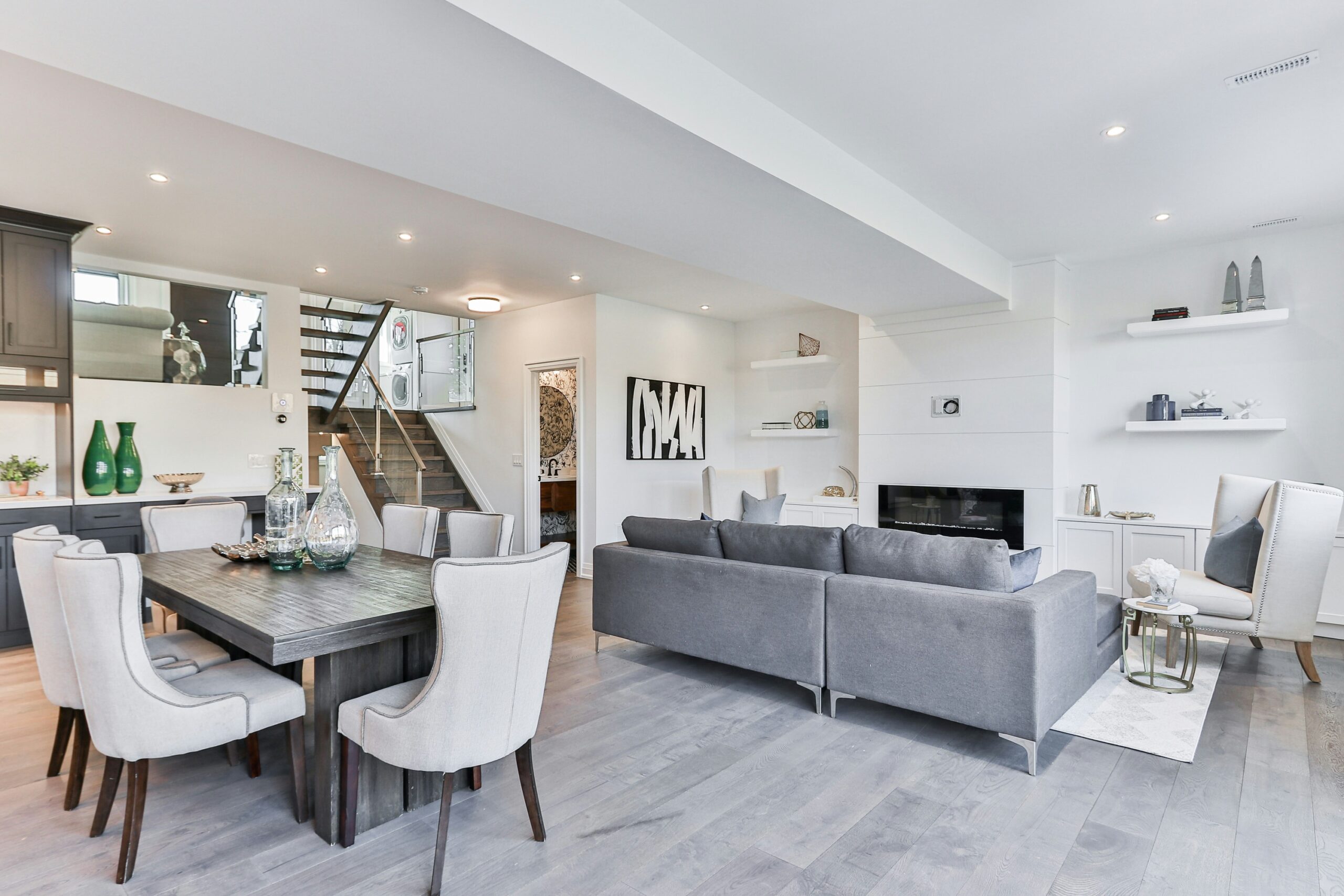
Sometimes nothing is “wrong” with your home… and yet, everywhere you look it sparks frustration and anxiety.
The layout that used to work suddenly feels cramped. The room you loved starts to irritate you. The house feels tired, cluttered, or emotionally heavy, even when it’s tidy.
And often, it’s not because you need a full renovation.
It’s because your life has changed.
Big life transitions reshape our needs. Sometimes quietly. Sometimes all at once. A new baby. A breakup. A blended family. A loss. A health shift. Aging parents. Downsizing. Empty nesting. Working from home.
Your home is the container for all of it, so when your home no longer fits your life, you feel it in your body: tension, fatigue, overstimulation, even suffocation. You might find yourself thinking:
- “I just can’t get comfortable anymore.”
- “This space feels like a version of me, that is not me anymore.”
- “I don’t even know where to start.”
- “This home holds to many old memories of the past”
- “The walls feel like they are closing in”
If that’s you, let this land gently: needing change doesn’t mean you’ve failed at creating a home. It means you’re evolving.
And the good news is… small, thoughtful shifts can make a meaningful difference.
Why life transitions make our homes feel “off”
When life changes, your routines change. Your priorities change. Your capacity changes.
But your rooms? They stay the same.
That mismatch creates friction, and it shows up in ways people don’t always connect to design:
- You can’t relax in your living room anymore (even though it’s “nice”).
- Your bedroom doesn’t feel restful.
- Your kitchen feels chaotic.
- Your entryway stresses you out the second you walk in.
- You feel like you’re constantly managing the space and nothing seems to improve the problem areas.
This is where interior design becomes about more than “making it pretty.” The real goal is to make your space work for your life and support the chapter you’re in now.
The power of small changes
When you’re going through a transition, the last thing you need is a project that adds more decisions. That’s why I love starting with small changes that create real relief.
Not trendy. Not complicated. Just intentional.
Here are a few of my favourite small shifts that can help your home feel like it fits again.
1. Rework the layout before you buy anything
A lot of people assume the solution is new furniture. Often, the solution is flow.
Try asking:
- Does this room support how we actually live?
- What’s the one daily frustration in this space?
- Is there an area where people always collide or where clutter piles up?
Sometimes it’s as simple as:
- rotating the sofa to open up a pathway
- pulling furniture off the walls (yes, really)
- creating a clearer conversation area
- removing one piece that’s just too large for the room
A better layout can make a space feel calmer, more functional, and easier to live in — without spending a dollar.
2. Create zones that match your season of life
Transitions often come with competing needs: rest + productivity, connection + privacy, togetherness + independence.
Zoning helps your home hold more than one purpose without feeling chaotic.
A few examples:
- A small reading corner that becomes your reset spot
- A “hidden” landing zone by the door that stops the daily clutter spiral
- A dedicated homework station (that isn’t the kitchen table)
- A space where the family can come together in one room and have a seat.
This is where your home becomes supportive — not just functional.
3. Make one room feel like an exhale
If the outside world feels like a lot right now, taking on a renovation might not be the answer but you still need a space within your home to feel safe, at peace and a place that is comfortable to be in. Start with one room for now, or just one area in a home?
Pick one space and ask: What would make this feel like an exhale?
Then choose one change that creates that feeling:
- softer lighting (lamps over overhead lights)
- warmer textiles
- a simplified colour palette
- less visual clutter
- a chair that actually feels good to sit in
Small comfort upgrades can make a big difference. They can be the foundation for feeling okay again.
4. Use paint strategically (especially if you feel emotionally “stuck”)
Paint is one of the most practical ways to reset a space — and it doesn’t need to mean repainting everything.
A few simple ideas:
- Paint one wall to create a focal point within the room
- Refresh a hallway that feels dark or heavy
- Choose a softer tone in a bedroom that feels too bright or too sterile
- If you are more advantageous, select your favorite pattern or a trending wallpaper style on one wall within a room to add interest and your current style.
If you’re able, consider low-VOC options. It’s a simple way to support the health of your home while keeping the project realistic.
5. Let nature back into the space
When life feels unstable, grounding matters. Bringing nature into your home is one of the simplest ways to provide a natural texture, and a fresh feeling that can calm the body and mind.
This can be as small as:
- adding one plant where you’ll actually see it daily
- using wood, linen, wool, or stone textures
- opening up the window area (lighter curtains, fewer visual barriers)
- bringing in artwork or colours inspired by the outdoors
It doesn’t have to be dramatic. It just needs to feel real.
6. Edit with intention (not perfection)
When people hear “declutter,” they often think of pressure or minimalism.
That’s not the goal.
The goal is to remove what makes daily life harder — especially during transitions.
A gentle place to start:
- Clear one surface you look at every day (kitchen counter, bedside table, entryway)
- Remove one “guilt item” you keep avoiding (something you don’t love but keep because you should)
- Create one home for one category that floats around (mail, shoes, cords, bags)
This isn’t about having less. It’s about having less noise. Be creative, think outside the box, or really what can we put inside a box!
7. Choose pieces with a story (and keep it sustainable when you can)
During life transitions, people often crave meaning — not just a new look.
That’s why I love incorporating vintage, antique, or refurbished pieces when the style and lifestyle allow. It adds soul, reduces waste, and creates a home that feels collected rather than copied.
Sustainable design doesn’t have to be perfect. It’s about being intentional — making choices that are better for both the environment and the people living in the home, whenever possible.
A simple “Does my home fit my life?” checklist
If you’re not sure where to begin, try these questions:
- What part of my day feels hardest at home right now?
- Which room causes the most tension (even quietly)?
- What do I wish was easier in my daily routine?
- What do I need more of: rest, space, function, softness, privacy, connection?
- If my home could support me in one way during this transition, what would it be?
Your answers will point to the right next step.
You don’t have to do this alone
When people reach out for design support, it’s often because they’re overwhelmed — busy, second-guessing decisions, managing budgets, or carrying the emotional weight of change.
My role is to simplify the process, guide you with clarity, and help you make decisions that feel like you. Not because you “should” change your home — but because your home should support your life.
If your home hasn’t caught up to your life yet, that’s okay.
We can start small. We can start gently. And we can make your space feel like home again.